

Operating room management system: tracking the surgical workflow
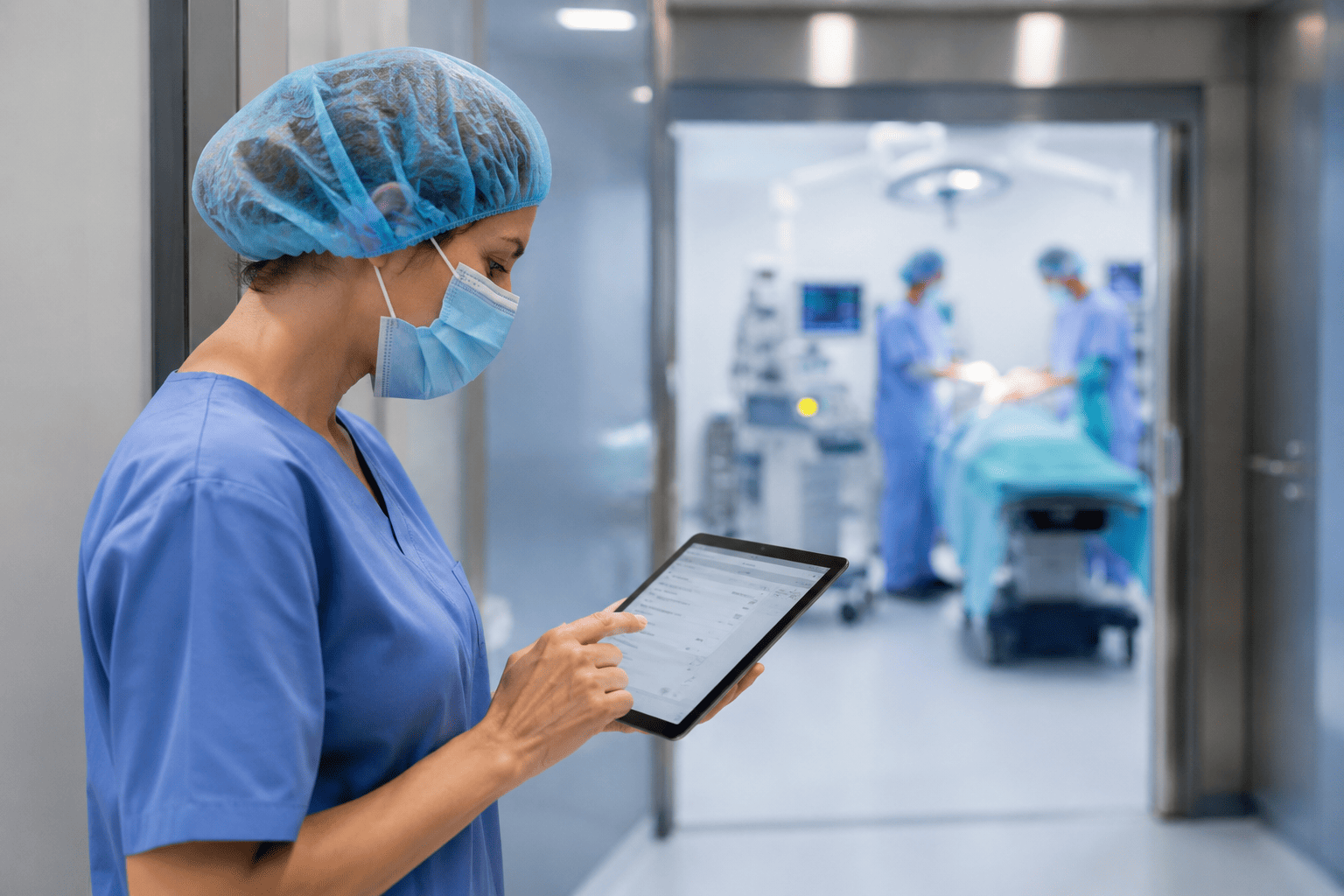
Surgical workflow tracking: how to manage the entire surgical pathway
Surgical workflow tracking involves connecting and making available the information generated throughout the entire surgical pathway, from the request for surgery and waiting list management through to scheduling, operating theatre activities and subsequent post-operative stages. Digitalising this pathway means moving beyond fragmented management across documents, applications and separate records to create a digital surgical workflow in which patients, procedures, surgical teams, timings, materials and activities can be managed in a coordinated way.
The aim is not simply to record what happens during surgery, but to ensure continuity of information before, during and after the procedure, providing useful data for coordinating activities and monitoring resources and performance.
An operating room management system should therefore support the entire process rather than simply recording the surgical procedure itself. SISOS, Promedital’s operating theatre management software, supports the digitalisation of the surgical pathway and enables information relating to operating theatres, staff, materials and timings to be managed within the workflow.
From the waiting list to post-operative care: managing the digital surgical workflow
Digitalising the workflow makes it possible to manage information generated at different stages in a coordinated way. A change to the operating list, for example, may affect theatre allocation, surgical team organisation and the materials required for the procedure. Having this information within the same system makes it easier to update schedules and coordinate activities.
The same applies when a procedure is rescheduled or resource allocation changes: the update should be reflected in the information required for subsequent activities, preventing different versions of the schedule from continuing to circulate among those involved.
SISOS supports this process through waiting list and operating list management, the allocation of theatres, staff and materials, and the monitoring of surgical activities. The pathway also includes the pre-operative stage and activities carried out during surgery, through to subsequent operations such as patient discharge and the printing of surgical registers.
In this way, information collected during surgical activities remains associated with the correct pathway and can be used in subsequent stages, preventing scheduling, operating theatre activities and post-operative documentation from being managed as completely separate processes.
Surgical workflow tracking: what data should be connected?
Achieving a complete view of the pathway does not mean collecting every possible piece of data indiscriminately. Instead, it is necessary to identify the information that is genuinely required to manage activities effectively. Depending on the organisation and the solutions adopted, surgical workflow tracking can connect:
- patient, request and type of surgical procedure;
- waiting list position and scheduling;
- allocated operating theatre, surgical team and staff involved;
- planned and actual timings for different activities;
- checklists and information recorded throughout the pathway;
- materials, devices and consumption associated with the procedure;
- surgical instruments used;
- relevant information from the pre-operative, intraoperative and post-operative stages.
The value of this data comes from the ability to associate it correctly with the same surgical pathway and make it available to the different functions that require it. Tracking therefore makes it possible to maintain a relationship between the organisational, clinical and logistical information generated throughout the process, without creating multiple disconnected archives and records.
For this to happen, an operating room management system should not become yet another isolated application. Integration with the systems already in use within the healthcare organisation enables the necessary information to be shared between different systems while reducing duplication and manual data entry.
In a hospital environment, the information required for the surgical pathway may come from different systems. Interoperability avoids the need for staff to enter the same information into multiple applications and helps maintain consistency between the data used at different stages of the process.
SISOS is designed to interface with healthcare information systems using the HL7 standard, facilitating data exchange with the organisation’s wider digital ecosystem.
Operating theatre and CSSD: integrating SISOS and SIXSTER
An essential part of the surgical pathway concerns surgical instruments. The management of operating theatre activities and the processes through which instruments and sets are reprocessed belong to different operational areas, but they generate information that may be relevant to the same pathway.
SISOS supports surgical workflow management, while SIXSTER manages surgical instrument traceability within the CSSD. SIXSTER covers the different areas of the CSSD and is designed to interface with equipment used within the department, such as washer-disinfectors and sterilisers, as well as with other information systems.
The two systems are natively integrated. This integration makes it possible to connect information generated by instrument management processes with the SISOS operating room management system, preventing the two areas from remaining isolated from an information perspective. This becomes particularly relevant when building more comprehensive traceability across the surgical pathway, allowing information about surgical activities to interact with data relating to instrument management.
The roles of the two systems nevertheless remain distinct: SISOS supports surgical workflow management, while SIXSTER manages the traceability of instruments and their associated processes within the CSSD. Integration therefore does not replace the specific functions of either application, but facilitates the exchange of information between closely interconnected processes.
Operating room management system and KPIs: measuring efficiency, resources and costs
Tracking the surgical pathway makes it possible to transform day-to-day activities into data that can also be used to evaluate performance. The availability of structured information enables performance to be analysed through dedicated reports and makes it possible to monitor areas such as timings, theatre utilisation, staff and material usage, and inventory management.
Data collected throughout the workflow therefore becomes a tool for identifying inefficiencies, assessing resource utilisation and supporting cost control. Comparing planned and actual timings, for example, can reveal recurring discrepancies; analysing theatre utilisation can provide insight into available capacity, while information on materials and inventory helps provide a clearer understanding of how resources are being used.
The value of an operating room management system therefore extends beyond managing the operating schedule: reports and KPIs make it possible to use information generated throughout the surgical pathway to support organisational decisions based on data that has actually been recorded.
Would you like to improve surgical workflow tracking and connect data, resources and processes more effectively? Contact Promedital to discover how SISOS and Promedital’s integrated solutions can support the digitalisation of your operating theatres.