

Hospital infections and traceability
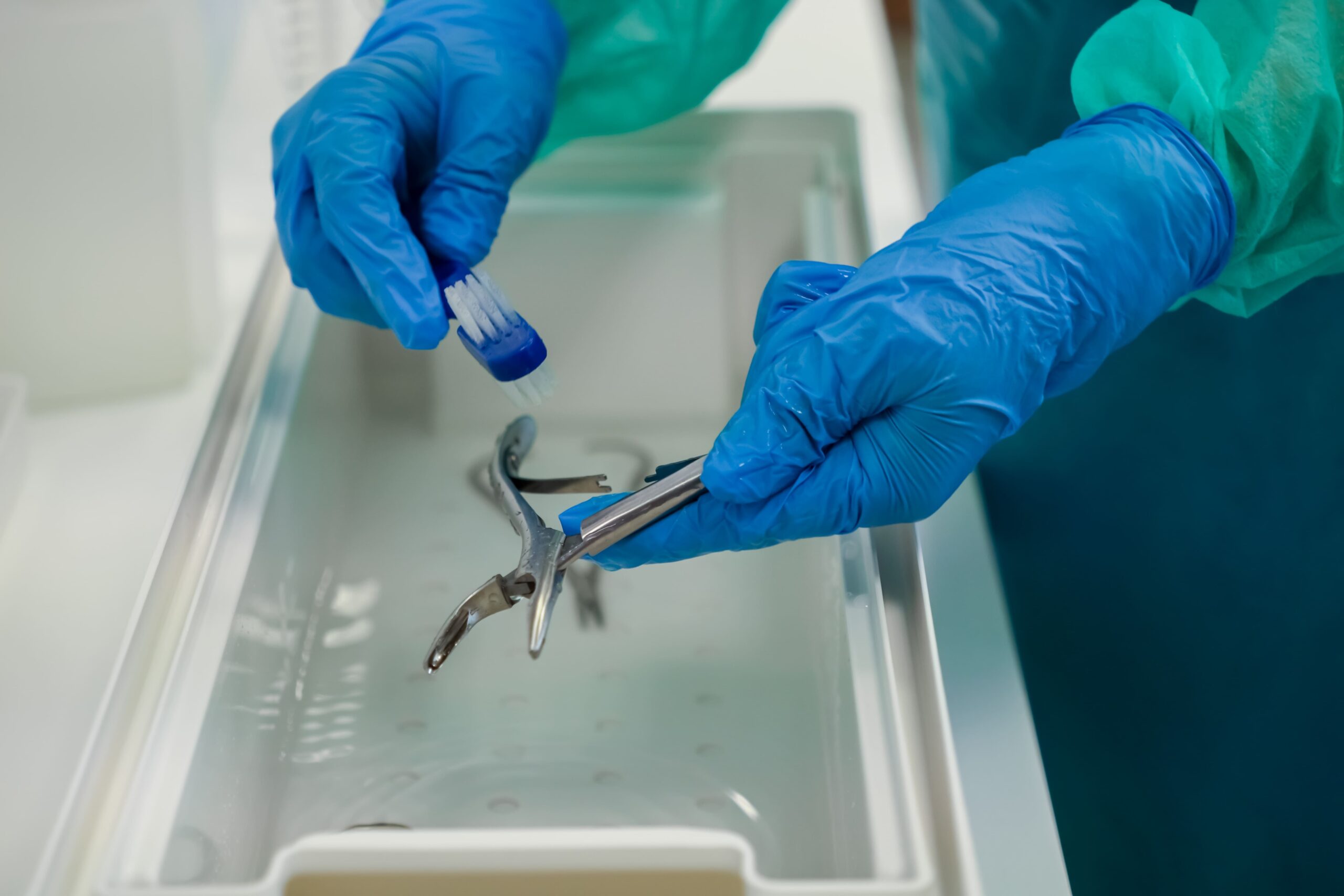
How sterilisation traceability prevents hospital infections and improves clinical safety
Hospital infections represent one of the main challenges for clinical safety and the sustainability of healthcare systems. Any error in the management and sterilisation of instruments can turn into a real risk for the patient. According to the Italian National Institute of Health, a significant proportion of these infections is preventable through proper procedures, process control, and structured activity management. For this very reason, the management of information throughout the entire instrument lifecycle becomes a key element. In this context, Promedital supports hospitals and CSSD healthcare facilities with integrated solutions that digitalise workflows, make processes verifiable, and concretely reduce clinical risk, strengthening infection prevention and control in hospitals.
Hospital infection control: where risks arise
To understand the value of traceability, it is essential to start from the critical points of the process and the real consequences they may generate. Hospital acquired infections do not stem from a single mistake, but from a series of uncontrolled steps throughout the instrument pathway. In particular, the most critical stages are:
- instrument receipt
- decontamination and washing
- set assembly and packaging
- sterilisation
- storage
- use in the operating theatre
At each of these stages, anomalies may occur – missing instruments, non-compliant parameters, loss of information – all of which compromise sterility and weaken infection control at hospital level.
Without a structured system, these issues remain invisible until they result in an adverse event. This is where traceability plays a crucial role: by linking every stage, every operator, and every device, it enables organisations to transform a fragmented process into a continuous and controlled workflow. Solutions such as SUIS and EVA provide tangible support in the most critical phases, guiding operators during set assembly and automatically verifying the correctness and completeness of instruments, thereby reducing human error and supporting infection prevention in the hospital.
Sterilisation traceability in CSSD: data, workflow and real control
To be truly effective, traceability must rely on complete, reliable and automatically collected data throughout the entire workflow, avoiding manual steps that may introduce errors. It is not just about knowing “who, what, when, and where”, but also about integrating key technical information: unique set identifiers, sterilisation cycle parameters, test results, batch numbers, expiry dates, and device location within the clinical pathway. This is essential for ensuring an effective sterilization process in CSSD environments.
In this way, every instrument becomes part of a verifiable digital history. Promedital solutions, such as the SIXSTER surgical kit sterilisation traceability software, allow organisations to centralise this information, eliminate manual errors, and ensure continuous monitoring of activities. The result is a system that not only records but actively guides processes, supports staff, and ensures regulatory compliance within CSSD sterilization operations.
A concrete example is the National Cancer Institute of Milan, where the introduction of a digital traceability system made it possible to monitor the entire lifecycle of surgical instruments. Having centralised, real-time accessible information has improved process control, simplified audits and increased safety levels across all stages, from sterilisation to use in the operating theatre, reinforcing overall clinical safety.
From non-conformity management to error prevention
When the system is properly structured, the way critical issues are managed also changes, along with the level of organisational control. In the presence of a non-conformity – such as an out-of-parameter cycle or an incomplete set – traceability makes it possible to immediately identify the devices involved and intervene in a targeted manner.
This approach avoids widespread disruptions and reduces operational impact, while enabling a shift from a reactive to a preventive approach. Integration with automated control and verification technologies makes it possible to detect errors before they reach the patient, significantly improving overall process quality and strengthening infection prevention and control in hospitals.
A significant case is that of Servizi Ospedalieri S.p.A., where managing large volumes of devices required precise and continuous control. The adoption of traceability systems made it possible to optimise workflows, reduce response times in the event of anomalies, and ensure more efficient non-conformity management, delivering tangible benefits even during audit phases.
From CSSD to the operating theatre: an integrated system for quality and clinical safety
The real value emerges when data does not remain confined to the sterilisation department but accompanies the instrument all the way to the operating theatre and throughout the entire care pathway. In this way, every surgical phase can be linked to the devices used, creating an information continuity that is essential for patient safety and effective hospital infection control. The benefits are concrete and measurable:
- reduction in non-conformities
- greater adherence to procedures
- significantly reduced traceability times
- availability of data for continuous improvement
Moreover, during audits, having complete and easily accessible information makes it possible to objectively demonstrate process quality and compliance in CSSD healthcare environments.
Looking to move from reactive control to a truly predictive system? Contact Promedital to discover how traceability solutions can integrate CSSD and operating theatres, improving safety, efficiency, and data management while reducing hospital acquired infections.