

AI in healthcare: concrete opportunities for efficiency, safety and innovation
by Antonio Ciccia – CTO, Promedital
In recent years, artificial intelligence (AI) has moved beyond the realm of research and into hospital wards, laboratories and, increasingly, management software and clinical processes. But what does using AI in healthcare really mean? And how can it improve service quality, reduce errors and support operators?ri?
In this article, we analyse the practical applications of AI in the healthcare sector and present EVA, the solution developed by Promedital to bring artificial intelligence into sterilisation centres.
What is artificial intelligence in healthcare?
Artificial intelligence encompasses a set of technologies capable of simulating human cognitive abilities such as learning, pattern recognition, and decision-making. In healthcare, its applications continue to grow: from assisted diagnosis to surgical planning, from hospital logistics to data security.
The goal is not to replace staff, but to enhance their work, automate repetitive tasks, reduce the margin of error, and provide more advanced support tools.
The main applications of AI in healthcare
Here are some of the areas where artificial intelligence is already delivering real value:
Medical imaging diagnostics
Machine learning algorithms help radiologists detect anomalies in CT scans, MRIs, or X-rays with greater speed and accuracy.
Clinical decision support
Intelligent systems analyze a patient’s clinical data to suggest personalized therapeutic pathways.
Optimization of hospital processes
AI is used to optimize emergency room flows, bed management, and resource allocation.
Management of sterilization and logistics activities
This is where EVA, the intelligent assistant developed by Promedital for the automatic control of surgical sets on loan for use, comes into play.
EVA: How AI enhances safety in the sterilization unit
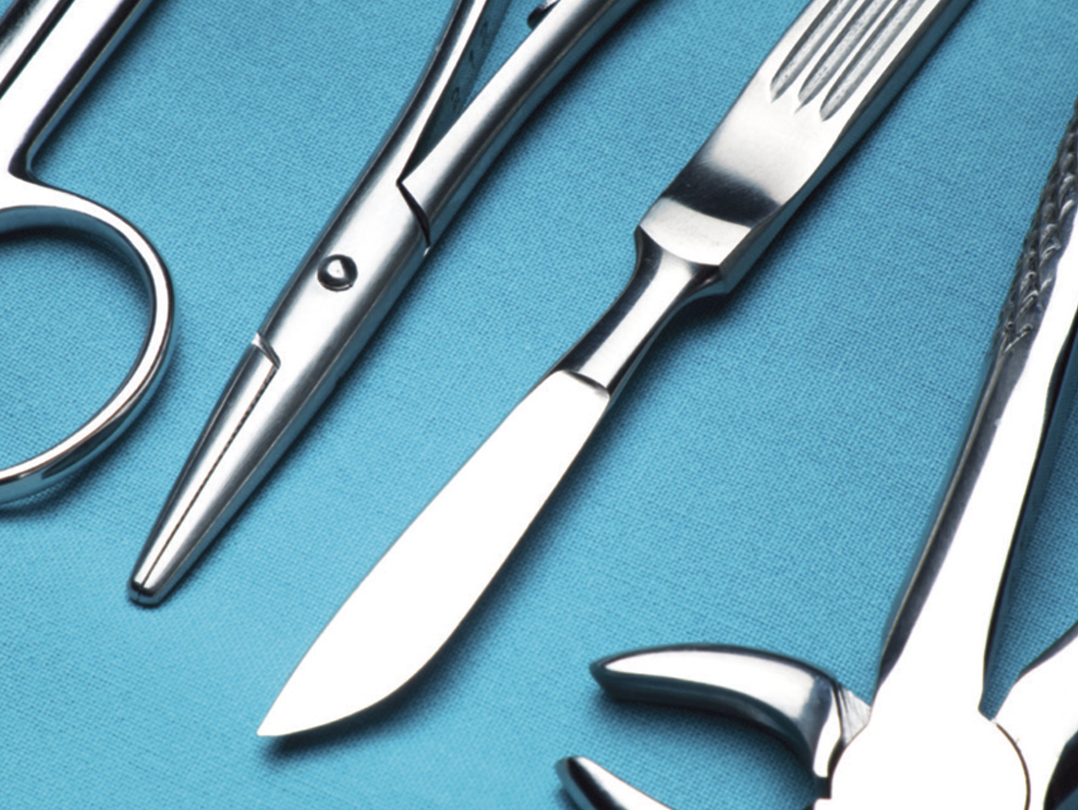
EVA – Enhanced Vision Assistant is a system based on intelligent image analysis, designed to automatically verify the content of surgical sets during acceptance, reassembly, and return.
Thanks to artificial intelligence, EVA:
- Recognizes surgical instruments inside the set, even without RFID or DataMatrix markings
- Automatically flags missing or incorrect instruments, significantly reducing the risk of human error
- Stores images and reports to ensure complete process traceability
- Generates verification documents for return to the supplier or internal archiving
- Integrates seamlessly with Sixster, Promedital’s sterilization traceability software
All with a simple interface and minimal impact on existing workflows.
The concrete benefits of AI in daily operations
Using artificial intelligence in environments such as the sterilization unit brings tangible advantages:
- Greater patient safety, thanks to the reduction of missing or incorrect instruments
- Full traceability, useful for audits, quality control, and medico-legal accountability
- Operational efficiency, saving time for technical personnel
- Enhancement of staff work, freeing operators from the most repetitive manual checks
Conclusion: Artificial intelligence, today
AI in healthcare is no longer a future promise but a concrete resource already used in many operational contexts. With solutions like EVA, Promedital demonstrates that innovation can be accessible, integrable, and dedicated to improving safety.
We will continue to invest in intelligent solutions to build a more efficient, transparent, and patient-centered healthcare system.
Would you like to experience EVA live?
Contact us for a demo or visit the dedicated section on our website.